

Wisdom Tooth Extraction
Remove your wisdom tooth in a quick and effective way.
Wisdom Tooth Extraction Explained
Wisdom tooth extraction is a tooth removal treatment that offers relief and comfort from severe pain. There are two wisdom tooth extraction options available for you if you are looking for treatment – surgical and non-surgical wisdom tooth extractions. The treatment helps you to maintain optimal oral hygiene and prevents other dental problems from emerging in the future.
The treatment process is relatively straightforward. Our dentists will do an evaluation of your wisdom tooth/teeth with a detailed consultation and examination. They will then conduct a complete diagnostic examination with the help of an OPG (panoramic X-ray). Our dentists will then opt for either a surgical or non-surgical wisdom tooth extraction depending on your type and severity of impaction.
What are Wisdom Teeth?
Wisdom teeth are the molars (back teeth) that are on the furthest end of your mouth. They are also called third molars. Most wisdom teeth erupt during the ages of 16 to 21, and are the last set of adult teeth to grow in.
What are the different types of wisdom tooth extraction?
There are two different types of wisdom tooth extractions – simple extraction (non-surgical) or surgical extraction. The type of treatment rendered to you will be dependent on the current state of your wisdom tooth.
Simple Extraction
You will usually undergo a simple extraction if your wisdom tooth is visible but not impacted.
During the simple extraction procedure, a local anaesthetic will be administered to you so that you do not feel any pain. Your dentist will then loosen your wisdom tooth and extract it.
Surgical Extraction
A surgical extraction or wisdom tooth surgery is necessary when your tooth is partially erupted, and/is impacted.
During a surgical extraction, your dentist can provide you with multiple sedation options to numb your pain and reduce discomfort.
Wisdom Tooth Extraction in Singapore
At Kong Dental Surgery, we understand that some patients are afraid of coming for wisdom tooth extraction despite feeling extreme discomfort. This is because of the fear of visiting the dentist or fear of pain. Some patients are also cautious because of the myth that wisdom tooth extraction can be dangerous, even deadly.
If your wisdom tooth is impacted or present, our dentists at Kong Dental Surgery will usually advise you to head to a dental clinic you trust to remove your wisdom tooth. Impacted wisdom teeth do not have sufficient room to develop properly and can erupt from the gums partially (partially impacted) or break through the gums (fully impacted).
Why Do I Need To Remove Impacted Wisdom Teeth?
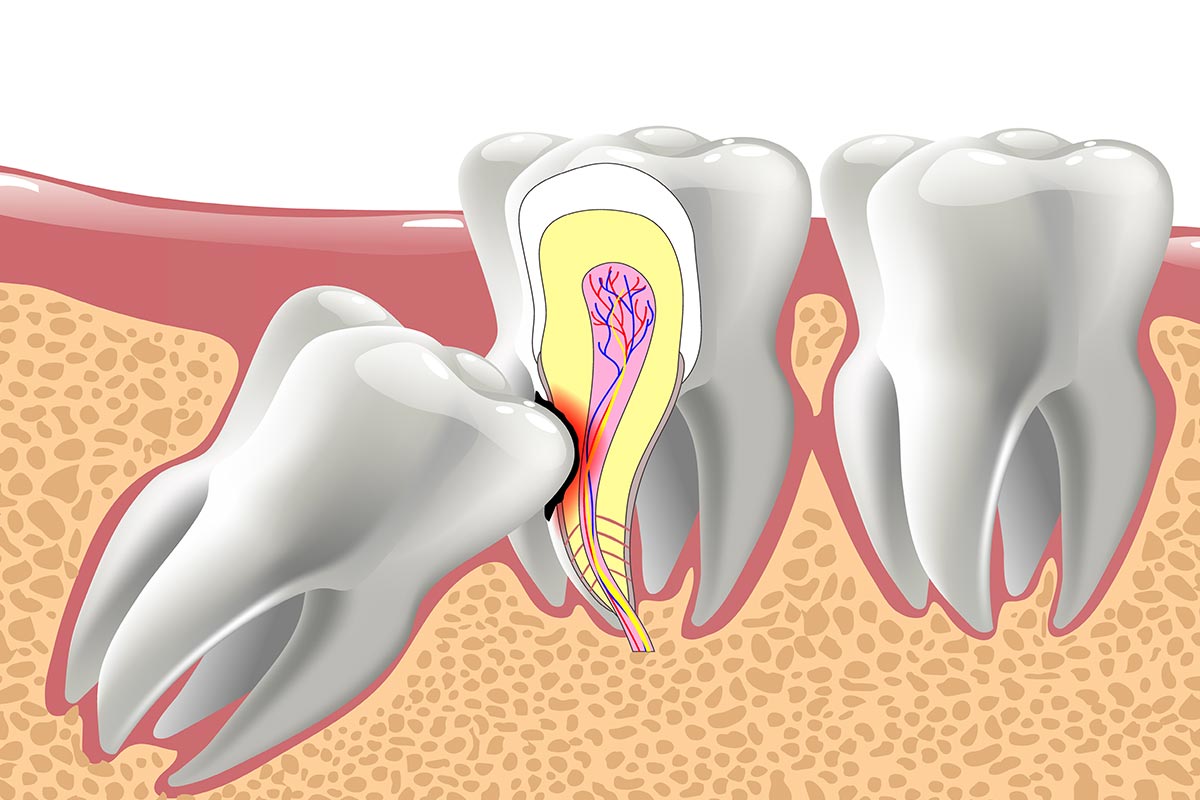
It is usually highly recommended to remove impacted wisdom teeth to prevent further or potential pain or damage to the teeth. A lack of pain is not an indication of no underlying dental issues.
Some situations that call for impacted wisdom teeth to be removed immediately are:
Common Problems of Unremoved Wisdom Teeth
Impacted wisdom teeth can also result in other dental problems that will lead to costly dental treatments. Some common dental issues that arise from unremoved impacted wisdom teeth are:
Tooth decay
Wisdom teeth make it hard for you to properly brush the back of your teeth. When your teeth are not cleaned the right way, a buildup of plaque is formed. The plaque buildup can lead to tooth decay of the wisdom tooth as well as the surrounding teeth.
Gum disease
Prolonged buildup of plaque can cause poor oral hygiene, which can affect the gums and cause gum disease. When this happens, you might experience swollen and bleeding gums, persistent bad breath and aching gums and teeth.
Crooked and uneven teeth
When wisdom teeth are not being removed, the growth of the wisdom teeth as an additional tooth can cause teeth crowding. When this happens, it can push against your existing teeth and cause them to be crooked and uneven. Besides negatively affecting your appearance, it can also affect your bite and oral hygiene.
Patients who have sought orthodontic treatment previously might risk having their teeth become misaligned again.
Jaw damage
In extreme cases, dental cysts can form around the impacted wisdom tooth site. The gradual pressure from the unremoved cysts can put pressure on the surrounding nerves and cause potential damage to both the jaw and the surrounding teeth.
Do I still need to remove my wisdom teeth if they do not hurt?
While you will find differing opinions from dental experts on this matter, it is highly recommended that you remove your wisdom tooth even if it is not causing you pain or discomfort. Wisdom teeth that do not fully erupt can still cause potential dental issues that can lead to health problems.
Wisdom Tooth Removal Process
The wisdom tooth removal process can be broken down into 3 simple steps at Kong Dental Surgery Clinic.
Step 1: Examination and Consultation
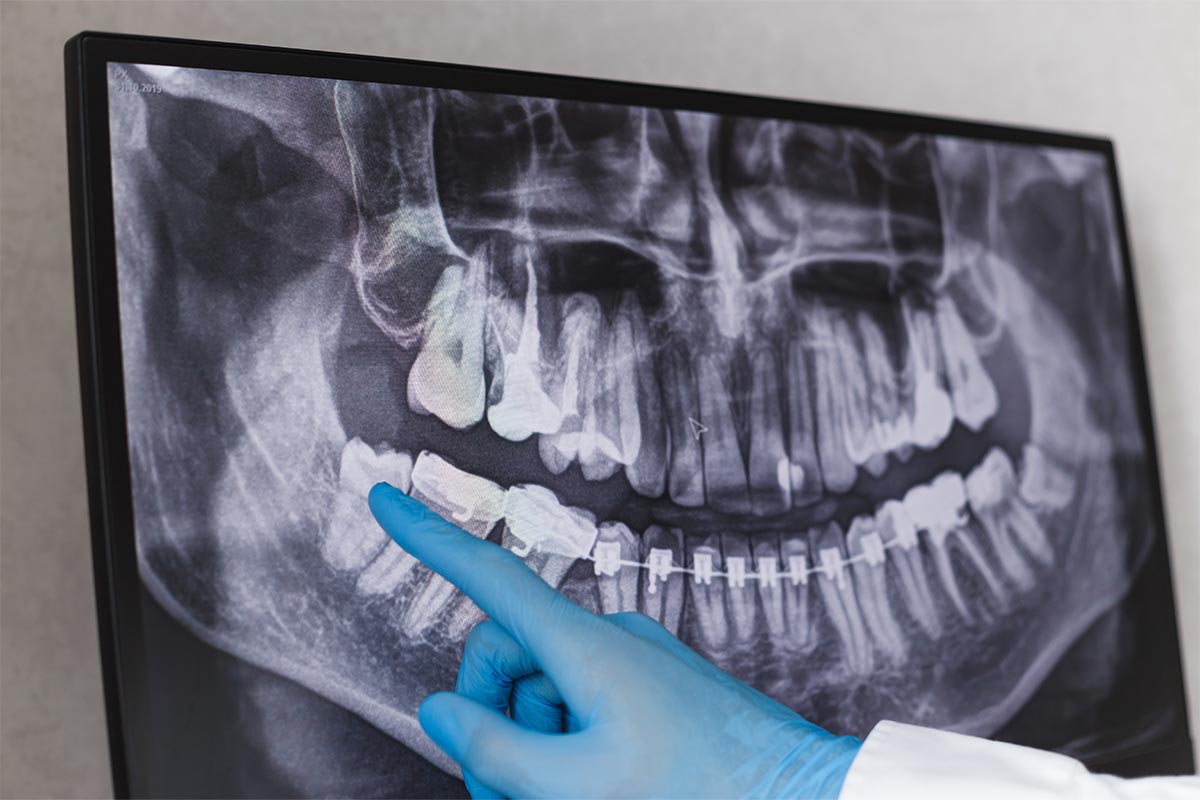
During the examination and consultation stage, our dentists will examine your wisdom teeth to see whether it requires non-surgical or surgical intervention. Patients who have a partially erupted or erupted wisdom tooth would typically require surgical removal of wisdom tooth.
Our dentists will conduct a thorough analysis of your current oral health. Once this is completed, our dentists will provide a basic treatment plan for you and explain how the entire wisdom tooth removal process will be like before proceeding with treatment.
Step 2: Treatment and Removal of Wisdom Teeth

Depending on whether you require non-surgical or surgical removal of wisdom teeth, your dentist will proceed to remove your wisdom teeth based on the indications.
The procedure will be conducted with the assistance of sedatives such as local anaesthetic. This is to ensure that you do not feel any pain during the removal process. In some cases, patients who have dental anxiety or the fear of feeling discomfort during a dental procedure, will request for IV sedation.
Wisdom Tooth Surgical Extraction Step-by-Step Process
This is a quick step-by-step wisdom tooth surgical extraction process that can help you better understand what will happen during your surgical removal procedure.
Anaesthesia is Administered
Local anaesthesia will be used during the wisdom tooth extraction procedure to ensure that you do not feel any pain throughout the procedure. At Kong Dental Surgery, it is possible to ask for other sedation options to help you have a better dental treatment experience.
Wisdom Tooth Removed
During the wisdom tooth removal process, the dentist will cut your surrounding gums to expose the tooth and bone. This is to gain access to your wisdom tooth. Once the bone is exposed, the tooth will be extracted.
It is common to feel a slight pressure or cracking sounds during the procedure, but you should not feel any pain.
Stitching of Gums
Once the wisdom tooth has been removed, the dentist will clean the extraction site and use stitches to close up the extraction hole. The stitches are necessary as they aid in the formation of blood clots to promote healing. The stitches are removed 1 to 2 weeks later.
How long does wisdom tooth removal take?
A simple wisdom tooth removal usually takes about 30 minutes to complete. Wisdom tooth surgeries will generally take between 30 – 60 minutes. If you are removing multiple wisdom teeth at one-go, it will take about an hour. However, the duration might be longer if the wisdom tooth is in a difficult position or if there are unexpected complications during the surgical procedure.
Step 3: Post-Treatment Care

After the treatment, it usually takes about 3-5 days to recover from your wisdom teeth removal procedure. Pain medication will usually be issued to you to help you cope and manage with your pain.
Post Wisdom Tooth Removal
There are certain steps and precautions that you might need to take after wisdom tooth removal to help you speed up your recovery.
What To Expect After Wisdom Tooth Removal?
Upon completion of your wisdom tooth removal, you might experience the following:
Minor bleeding
Pain on the extraction site
Stiffness of the jaw
Swelling of the face and cheeks
Bruising on the face
These symptoms should normally wear off within 1 to 2 weeks. If they continue to persist, it might be a sign of a complication. If this happens, you should contact a dentist.
Recovery Do’s and Don’ts After Extracting Wisdom Teeth

Things You Should Do After Extracting Your Wisdom Teeth
Take pain medication as prescribed by your dentist
Rest for the remainder of the day
Apply ice packs to the outside of your mouth if you experience any swelling
Brush around the extraction site gently and with care 24 hours after the extraction or surgical removal
Rinse your mouth with warm salt water or antibacterial mouthwash to assist in healing and keep your mouth clean
Contact your dentist immediately if you experience prolonged bleeding or excessive pain and unusual swelling in the surgical area

Things You Should Not Do After Extracting Your Wisdom Teeth
Consuming liquids with a straw
Going for strenuous exercise
Drinking sugary or carbonated drinks
Drinking alcohol
Smoking
Spitting or rinsing your mouth out with water
Brushing your teeth for at least 24 hours after extraction or surgical removal
Wisdom Tooth Extraction Cost in Singapore
At Kong Dental Surgery, we believe in providing high quality dental care at an affordable rate. Our dental treatment costs are wallet-friendly and fair. The cost of a simple extraction ranges from $150 to $250 per tooth, while a surgical extraction ranges from $950 to $1,250 per tooth.
Simple Extraction Cost
A simple extraction cost at Kong Dental Surgery costs $150 to $250 per wisdom tooth.
You will not be able to use your Medisave for this procedure.
Surgical Extraction Cost
Surgical extraction at Kong Dental Surgery costs $950 to $1,250 per wisdom tooth.
You may be able to use Medisave to cover the surgery partially.
Wisdom Tooth Extraction FAQs
1. How do I know whether my wisdom teeth are coming in?
The common signs of wisdom teeth emerging are:
● Gum pain
● Swelling
● White flecks at the back molar
● Pain or discomfort of the jaw
If you are experiencing any of the above, it might be helpful to seek the help of a dentist for confirmation to catch the early signs of wisdom tooth growth and prevent future dental problems.
2. Must I remove my wisdom teeth?
The short answer to this is no, not all wisdom teeth need to be removed, but it is highly recommended by dental experts to remove your wisdom teeth before any potential problems or pain arise.
Some of the common problems that can be caused by wisdom teeth are:
● Wisdom teeth pain
● Infection of the gum
● Dental cavities
● Gum disease
● Damage to neighbouring teeth
● Dental cysts, and
● Tumours.
You should remove your wisdom teeth if it has been causing you problems like:
● Pain
● Infection
● Crowding, or
● Dental issues.
If you are facing any of the above, you should seek immediate help from a dental clinic like Kong Dental Surgery.
3. What is the ideal age for wisdom tooth removal?
The ideal age for wisdom tooth removal is 18 to 24 years old. This is because the procedure is safer when the wisdom tooth root has developed to about two-thirds of its full size.
However, regardless of your age, if you are experiencing any form of pain or discomfort with your wisdom teeth, you should head to a dentist immediately for a check up.
4. Can I remove all my wisdom teeth at one go?
Yes, it is possible to remove all four of your wisdom teeth in a single session. In fact, many patients that Kong Dental Surgery sees opt for this treatment approach.
There are advantages to removing all wisdom teeth at once. Some of the advantages are:
● Undergoing anaesthesia only once
● Having a single recovery period
● Saving on dental costs
However, before you proceed with removing all your wisdom teeth at on go, there are factors that your dentist will take into consideration:
● The position of your wisdom teeth
● Whether your wisdom tooth has been impacted
● Your overall health
● Whether you have any existing dental concerns
If your wisdom teeth are all impacted or growing in a complex position, the procedure might be more extensive. Recovery could also be more challenging.
5. How do I know whether I need a non-surgical or surgical wisdom tooth removal?
The decision between a non-surgical (simple) or surgical wisdom tooth removal should be made by your dentist. Your dentist will have the experience and knowledge to identify the best method of extraction based on:
● The location of your wisdom tooth
● The complexity of the removal
● The health of the wisdom tooth
● Your health
A general rule of thumb that dentists use is:
Non-surgical wisdom tooth removal: Typically done for wisdom teeth that are visible and easily accessible. The dentist is able to use forceps to grip the tooth and gently wiggle it loose until it comes out.
Surgical wisdom tooth removal: Typically done for wisdom teeth that are impacted. This can be partially or completely blocked by other teeth or bones. The dentist will have to make an incision in the gum to access the tooth and remove it using forceps or other extraction instruments.
If you are unsure whether you need a non-surgical or surgical wisdom tooth removal, or would simply like to seek a second opinion, you can speak to one of our dentists at Kong Dental Surgery. We will be more than happy to help assess your case and recommend the best course of treatment for you.
6. Is it painful to have my wisdom tooth/teeth removed?
A wisdom tooth/teeth removal should not be painful. During the wisdom tooth procedure, you will be administered local anaesthetic to help numb the site. However, it is common to feel some pressure during the wisdom tooth/teeth removal procedure. It is also normal to experience slight discomfort and soreness after the procedure.
The amount of discomfort you experience during the removal will vary depending on the skill of the dental surgeon and the difficulty of the extraction. If you are still concerned about pain, you might want to consider doing the procedure under a stronger sedative – general anaesthesia. This will make you completely asleep during the procedure, so you will not feel any pain at all.
7. How many days of MC will I be issued if I have my wisdom tooth removed?
You will usually be given 1 to 2 days of MC for a simple extraction.
For wisdom tooth surgeries, you might be given 5 to 7 days MC depending on your dental surgeon and your dental condition.
8. Can I head to work immediately after a wisdom tooth extraction?
It is not recommended to head to work immediately after a wisdom tooth extraction. If possible, you should take a one or two day break from work, especially if your work involves manual or strenuous activities. This allows your body to focus on the healing process without additional stress.
Going back to work immediately may not provide the necessary time for your body to recover. This could potentially lead to discomfort or complications. Swelling and mild pain are common after the wisdom tooth removal procedure, and taking time to rest can help manage these symptoms.
9. Do I need to remove my wisdom tooth/teeth before having braces or Invisalign treatment?
The decision to remove your wisdom teeth before having Invisalign or any other orthodontic treatment is dependent on the specific circumstances of your case.
If your wisdom teeth can interfere with orthodontic treatment by overcrowding the teeth or causing them to shift out of alignment, you might need to remove the wisdom teeth before or during treatment to ensure that your orthodontic treatment can be effective.
However, in other cases, your wisdom teeth may not cause any problems and can be left in place. Your dentist or orthodontist will be able to assess your individual case and recommend the best course of treatment for you.
10. What are the risks or complications of wisdom tooth removal?
The risks and complications of wisdom tooth removal are very low, especially when the procedure is done with an experienced dental surgeon. This does not mean that they do not exist. Some of the common complications are:
● Pain
● Prolonged bleeding
● Swelling
● Infection
● Fever from infection
● Dry socket
● Damage to nearby nerves or teeth
If you are worried about the risks and complications of wisdom tooth removal, choose a qualified and experienced dentist that has a good track record working with wisdom tooth removals.
11. How should I prepare for my wisdom tooth extraction?
To prepare for your wisdom tooth extraction, you can follow the following guidelines:
● Follow the instructions given by your dentist or dental surgeon. They will give you specific instructions on what to do before, during, and after the procedure.
● Do not eat or drink anything after midnight the night before your surgery. This is important to prevent food or liquid from getting into your airway during the procedure.
● Take your prescribed medications as directed. This may include antibiotics to prevent infection or pain medication to manage pain.
● Arrange for someone to drive you home after your surgery. You will not be able to drive yourself home after the procedure.
● Get plenty of rest the day of your surgery. This will help your body heal.
12. How long does the bleeding last after wisdom tooth removal?
The bleeding should not last more than a few hours. Should the bleeding prolong for more than a few hours, you should contact your dentist or dental surgeon immediately.
The amount of bleeding and the time it takes to stop will vary depending on the individual and the difficulty of the extraction. Some people may experience no bleeding at all, while others may need to apply pressure to the extraction site for several hours.
In general, the bleeding should stop within 2-3 hours after surgery. However, it is not uncommon to see some blood-tinged saliva for up to 24-48 hours following surgery.
13. How long does the pain last after the wisdom tooth removal?
The pain after wisdom tooth removal can last for a few days to a week. The amount of pain and the time it takes to go away will vary depending on the individual and the difficulty of the extraction. Some people may experience no pain at all, while others may need pain medication for several days.
If the pain is severe or does not improve after a few days, you should inform your dentist about this.
14. How do I brush my teeth after wisdom tooth removal?
You should not brush your teeth immediately after a wisdom tooth removal. To prevent aggravating your extraction site, wait 24 hours before brushing your teeth.
You can use the following tips as a guideline on how to cleanse your mouth properly after your procedure:
● Use a soft-bristled toothbrush
● Brush gently around the extraction sites
● Rinse your mouth with warm salt water after brushing
● If you experience excruciating pain, stop brushing and consult your dentist
15. What foods can I eat after wisdom tooth removal?
For the first 24 hours after your wisdom tooth extraction, it is advisable to consume foods that are softer and easier for you to chew without affecting the extraction sites.
An example of foods that would be perfect for post-wisdom tooth removal are:
● Porridge
● Soups
● Smoothies
● Puddings
● Yoghurt
● Scrambled eggs
● Mash potatoes
● Pureed fruits and vegetables
● Oatmeal porridge
● Tofu
● Hummus
● Cheese
Even though it might be tempting to, you should refrain from using a straw even if you are on a liquid diet.
16. Why should I choose to have my wisdom tooth removed at Kong Dental Surgery?
Removing your wisdom tooth at Kong Dental Surgery means getting your wisdom teeth removed in a safe and comfortable way. Patients who have chosen us as their dental provider appreciate how our clinics run in a family-focused way. At Kong Dental Surgery, every patient who walks in is a part of our family.
Our dental team also has the relevant experience and qualifications to help make your wisdom tooth removal process as seamless as possible.
17. Can I use Medisave for wisdom tooth removal at Kong Dental Surgery?
Yes it is possible to use Medisave to subsidise the cost of your wisdom tooth removal procedure at Kong Dental Surgery. This subsidy is limited only to wisdom tooth removal surgeries and not simple extractions. However, if you hold a CHAS, Pioneer Generation or Merdeka Generation card, you might be able to enjoy subsidies on your simple extractions.
Under the Medisave scheme, you can claim up to $1,550 per tooth. The claimable amount is dependent on the complexity of your wisdom tooth removal procedure.
Welcome to Kong Dental Surgery
Kong Dental Surgery has been providing full-range and affordable dental care services since its establishment in 2010. Our team of dental specialists and dentists across our 5 dental clinics in Singapore provides a full range of dental care services from wisdom teeth extraction to orthodontics.
Visit us at our clinics in one of our locations:
Yew Tee Point, Choa Chu Kang (Limbang), Jurong East, Teck Whye Lane, and Sunshine Place.
Meet Our Dentist



Make An Enquiry
Let us know your concerns and our clinic staff
will get back to you in 1-2 hours.
Prefer to talk to our clinic staff directly?
Call our clinic to chat with our friendly nurses





General Information
21 Choa Chu Kang North 6 #01-27 Singapore 689578
Tel: +65 6767 9502
(Please Enter The Clinic From Outside The Mall)
Consulting Hours
Mon to Fri: 9AM to 9PM
Sat: 9AM to 6PM
Sun and PH: Closed

CONSULTATION HOURS
Mon to Fri: 9AM to 9PM
Sat: 9AM to 6PM
Sun and PH: Closed
Follow Us On:


Important Notice:
Kong Dental Surgery does not request payments to personal bank accounts. All payments must be made only to our official business accounts. We do not conduct transactions via personal messaging or unofficial channels. If you are unsure, please contact us directly to verify.
©Kong Dental Surgery Pte Ltd. All Rights Reserved.