
Sensitive Teeth in Singapore: Why It Happens and When It's a Warning Sign
Introduction
That sudden jolt of sharp pain when you sip iced kopi, bite into an ice cream cone, or brush your teeth in the morning, if it sounds familiar, you're not alone. In Singapore, tooth sensitivity affects more than half of the adult population, and clinical studies suggest that when dentists examine patients, the actual figure could be as high as 75%.
For most Singaporeans, the solution seems simple: pick up a tube of desensitising toothpaste and carry on. And while these toothpastes do work, they only numb the pain. They don't address the reason why your teeth became sensitive in the first place.
Here's what many people don't realise: tooth sensitivity is rarely just a surface issue. It's often your body's early warning system telling you that your gums are receding, and in Singapore, that's closely linked to gum disease. According to the 2019 National Adult Oral Health Survey, 77.6% of Singaporean adults have some form of periodontal (gum) disease. When you factor in early-stage inflammation, that figure climbs to 90%.
This article explains why sensitivity happens, when it's a red flag you shouldn't ignore, and what Kong Dental recommends.
---
Why Do Teeth Become Sensitive?
To understand tooth sensitivity, it helps to know what's happening beneath the surface.
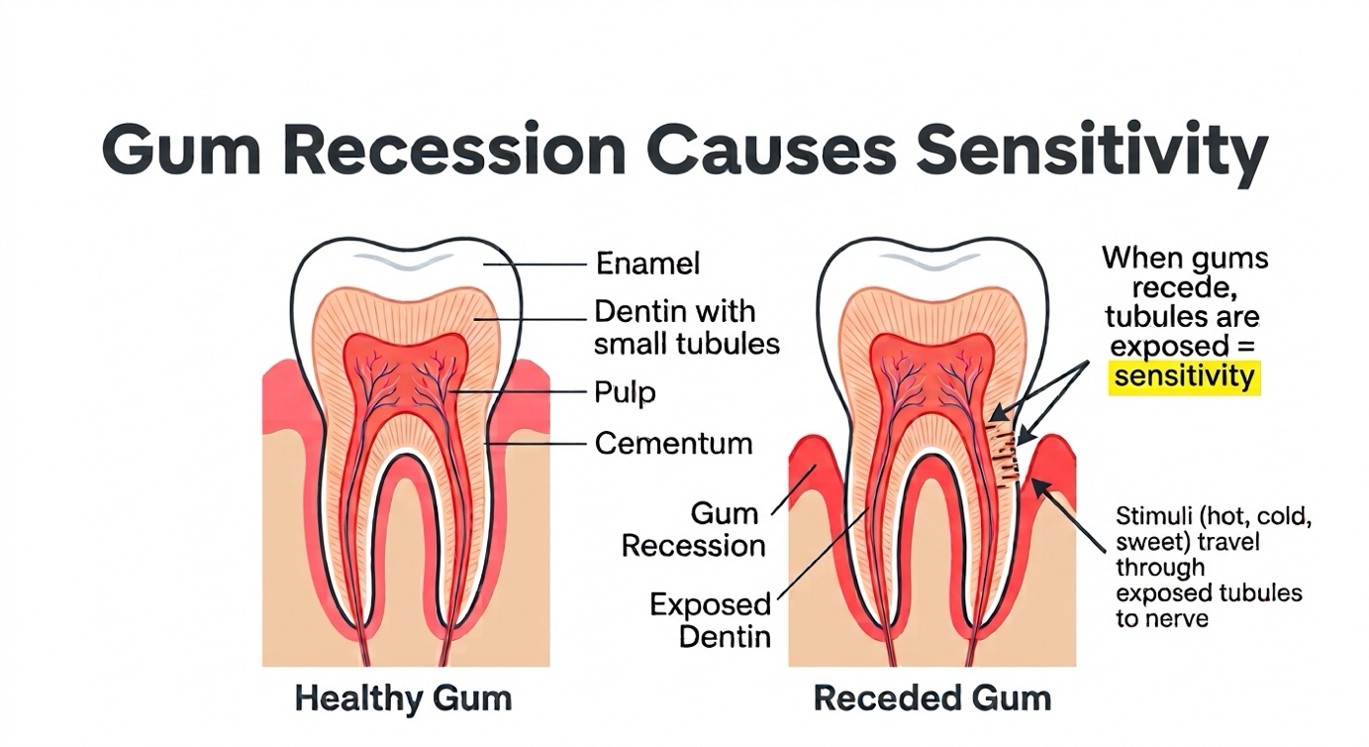
The crown of your tooth, the part you see when you smile, is protected by enamel, the hardest substance in your body. But the roots of your teeth, which normally sit below your gumline, don't have that armour. Instead, they're covered by a much thinner material called cementum.
When your gums recede (pull back), they expose these vulnerable root surfaces. The cementum wears away quickly, revealing the dentin underneath. Dentin isn't solid, it contains thousands of microscopic pathways called dentinal tubules that lead directly to the nerve centre of your tooth.
When something hot, cold, sweet, or acidic touches exposed dentin, fluid inside those tubules shifts. That movement stimulates the nerve, and you feel it as a sudden, sharp stab of pain.
What Causes Gum Recession?
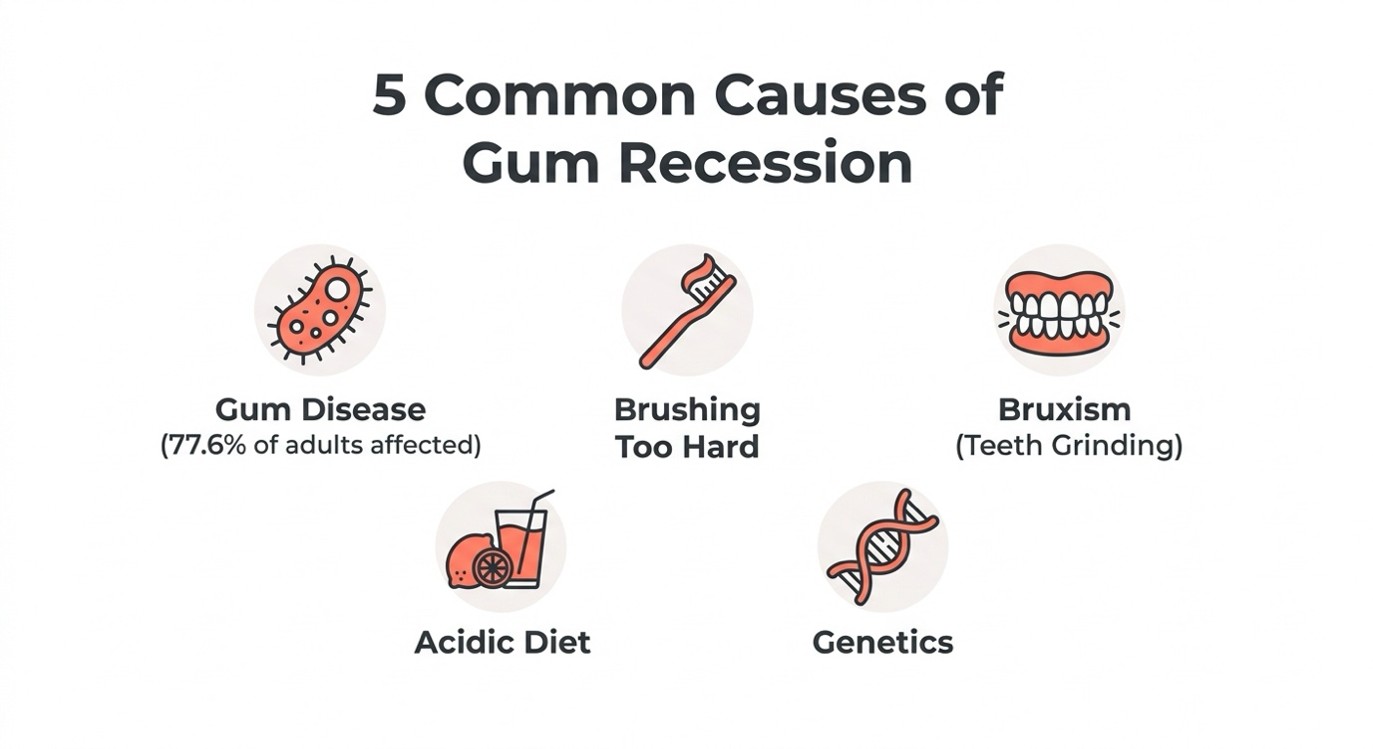
Gum recession doesn't happen overnight. It's usually the result of a combination of habits and conditions that are surprisingly common here:
1. Gum Disease (Periodontal Disease) — the leading cause
According to Singapore's National Adult Oral Health Survey, 56.9% of Singaporean adults have moderate-to-severe chronic periodontitis, with 41.2% suffering from moderate disease and 15.7% from severe disease. When bacterial plaque and tartar build up along the gumline, they trigger inflammation. Left untreated, this destroys the gum tissue and supporting bone, causing the gums to pull back.
Read more : Periodontal (Gum) Disease
2. Brushing Too Hard
Many Singaporeans brush with the best intentions—but too much force or a hard-bristled brush can physically wear down both enamel and delicate gum tissue. Over years, this repeated trauma causes gums to recede.
3. Teeth Grinding (Bruxism)
Clenching or grinding your teeth, especially at night, puts immense pressure on the tooth structure. This can cause the tooth to flex at the gumline, contributing to gum recession and enamel wear.
4. Acidic Foods and Drinks
Singapore's food culture includes plenty of acidic favourites—citrus, soft drinks, lime juice in kopi, wine. Frequent acid exposure chemically erodes enamel, speeding up dentin exposure.
5. Genetics
Some people are born with thinner gum tissue, making them more prone to recession regardless of how well they care for their teeth.
---
The Hidden Risk: When Desensitising Toothpaste Masks the Real Problem
Desensitising toothpaste works. Products containing potassium nitrate or stannous fluoride are clinically proven to reduce sensitivity by either calming the nerve or physically blocking the dentinal tubules. Many people experience relief within 2 to 4 weeks of consistent use.
But here's the problem: desensitising toothpaste treats the symptom, not the cause.
If your sensitivity is caused by gum recession due to periodontal disease, numbing the pain gives you a false sense of security. Meanwhile, the bacterial infection that's actively destroying your gum tissue and supporting bone continues unchecked.
Why This Matters in Singapore
Singapore's oral health data reveals a concerning gap between knowledge and action:
-60% of Singaporeans do not visit the dentist every six months as recommended
-43% only seek dental care when they're already in pain
-5.7% do not know what causes gum disease
-78.9% are unaware that regular checkups are essential for prevention
Read more : How Often Do you Need to See A Dentist
Read more: Top 5 Reasons to Visit A Dentist
This reactive approach, waiting until something hurts, means that periodontal disease often progresses silently for years. By the time symptoms become impossible to ignore (loose teeth, visible pus, pain when chewing), significant, irreversible damage has already occurred.
When Sensitivity Is a Warning Sign
Your body is trying to tell you something if you notice:
Bleeding gums during brushing or flossing (healthy gums should never bleed)
Receding gums that make your teeth look longer, or visible "notches" near the gumline
Persistent bad breath that doesn't improve with brushing
Loose teeth or a change in your bite
Pain that lingers for more than 30 seconds after a cold trigger, or pain that appears without any trigger
If you're experiencing any of these alongside tooth sensitivity, it's time for a professional assessment. Gum tissue cannot grow back once it has receded, but early intervention can stop the disease in its tracks and prevent further damage.
Is Sensitive Teeth Serious?
On its own, tooth sensitivity isn't dangerous. But when it's linked to gum recession from untreated periodontal disease, it's a sign that the supporting structures of your teeth are being destroyed. Historically, 31% of Singaporeans aged 60 and above have been completely toothless, largely due to severe, long-term gum disease.
The earlier you catch it, the more you can preserve.
---
What Kong Dental Recommends
At Kong Dental, we see patients with sensitive teeth every day. Our approach is always the same: we start by understanding the why before we treat the what.
Your Assessment Will Include:
-A full periodontal evaluationto measure gum health and check for pockets (gaps between the gum and tooth where bacteria collect)
-X-rays to assess bone levels and detect any hidden decay
-A discussion about your brushing technique, diet, and lifestyle factors
-A clear, transparent explanation of what's causing your sensitivity and what your treatment options are, with costs talked through before we begin
Treatment Is Tailored to You
For mild gum recession, we may recommend:
-Professional cleaning (scaling and polishing) to remove tartar buildup
-Switching to a soft-bristled brush and using gentle, circular motions
-Desensitising toothpaste alongside treatment, not as a replacement for it
-Fluoride varnish or bonding agents applied in-clinic to seal exposed dentin
For more advanced cases, scaling and root planning (a deep cleaning that removes bacteria from below the gumline) or gum grafting may be needed.
Affordable Care, Close to Home
Kong Dental accepts Medisave and CHAS (Community Health Assist Scheme) subsidies for eligible treatments, so you can get the care you need without unexpected costs. We have 5 neighbourhood clinics across Singapore, with extended hours and virtual consultations available.
Read More : CHAS and Dental Care in Singapore : What Is Covered and What to Know
The earlier we catch it, the more we can preserve. Gum health is the foundation of every smile—and that foundation deserves care that goes deeper than symptom relief.
---
Related: Could It Be Linked to Other Health Conditions?
Emerging research shows that gum disease doesn't just affect your mouth—it's linked to several serious health conditions:
Diabetes: Gum disease and diabetes have a two-way relationship. High blood sugar makes it harder to fight gum infections, and chronic gum inflammation can make blood sugar harder to control.
Heart Disease: Bacteria from infected gums can enter the bloodstream and contribute to inflammation in blood vessels, increasing the risk of heart attacks and strokes.
Osteoporosis: Bone loss in the jaw (from periodontal disease) and bone loss in the rest of the body (osteoporosis) share common risk factors and may influence each other.
Pregnancy Complications: Pregnant women with untreated gum disease are at higher risk of premature birth and low birth weight babies.
If you have any of these conditions—or a family history of them—taking care of your gum health becomes even more critical. A simple gum assessment at Kong Dental can give you peace of mind and help protect your overall health.
Conclusion
Sensitive teeth are common in Singapore, but they're not something you should simply live with or self-treat indefinitely. That sharp pain is your body's early warning system, and when it's linked to gum recession, the clock is ticking.
If you've been managing tooth sensitivity with desensitising toothpaste alone, it's time for a proper assessment. Our neighbourhood dental team is here to give you answers, not upselling. Same team, same standard, every clinic.
Book your gum health assessment at Kong Dental today.
📞 Call us at 9828 1213 or book online at www.kongdental.com
💳 Medisave and CHAS accepted
📍 5 neighbourhood clinics across Singapore
💬Virtual consultations is available — talk to our dentists from home
Modern dentistry with a heart. We're here for the long haul.


